An Exploded Bay
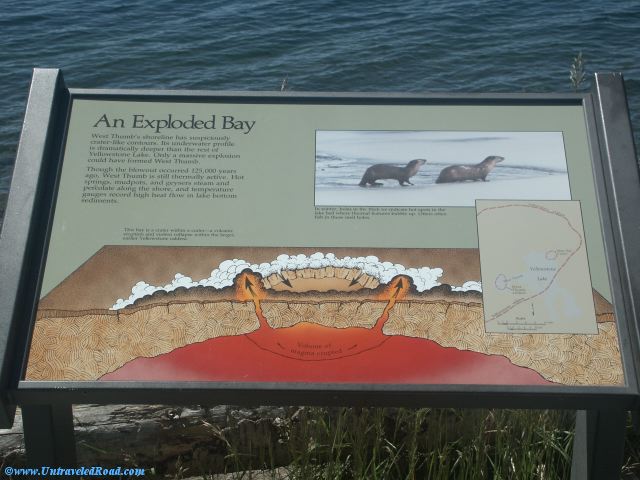
West Thumb's shoreline has suspiciously
crater-like contours. Its underwater profile
is dramatically deeper than the rest of
Yellowstone Lake. Only a massive explosion
could have formed West Thumb.
Though the blowout occurred 125,000 years
ago, West Thumb is still thermally active. Hot
springs, mudpots, and geysers steam and
percolate along the shore, and temperature
gauges record high heat flow in lake bottom
sediments.
This bay is a crater within a crater—a volcanic
eruption and violent collapse within the larger,
earlier Yellowstone caldera.
In winter, holes in the thick ice indicate hot spots in the
lake bed where thermal features bubble up. Otters often
fish in those melt holes.